Phone Handling for Cafes and Bakeries: Orders, Hours, Allergens
How cafes and bakeries can handle calls during the rush: pre-orders, opening hours, allergen questions, catering requests and when to hand off to a person.
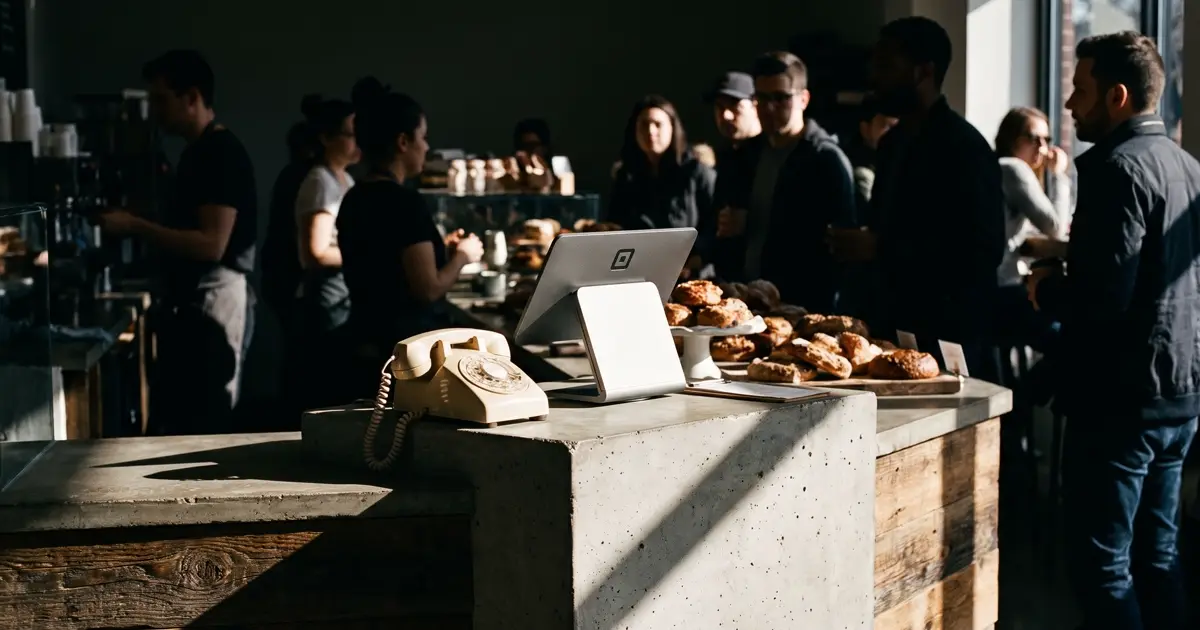
A small bakery phone rings when hands are covered in flour. The person who answers is usually also serving, boxing, or taking a delivery. Each call is short, yet every one costs the queue at the counter a little patience. Missed calls cost something too: a customer who wanted to order a celebration cake for Saturday and got no answer will often just try another shop.
This guide walks through the calls a cafe or bakery really receives, which of them are safe to answer with a recorded message or an automated assistant, and which need a person. It also covers the sensitive one, allergens. For general background, see Streamlining Phone Work in Small Businesses.
What callers actually ask
Before changing anything, spend a week writing down why people call. Most food businesses find the same short list:
The usual call types
- Opening hours and locationAre you open on Sunday, is there parking, are you near the station. Simple, repetitive and perfect to automate.
- Menu and availabilityDo you have sourdough left, is the seasonal tart on yet. Answers change daily, so they need a clear owner.
- Pre-orders and collectionCakes, bread for a weekend, boxes for an office. These need details written down correctly.
- Allergens and dietsIs it nut-free, is there a vegan option. Sensitive: accuracy matters more than speed.
- Catering and large ordersDates, numbers of guests, budgets. Handled well by a person who can quote and confirm.
- Everything elseLost property, suppliers, job enquiries, complaints, wrong numbers.
The easy wins: hours, location and menu basics
Opening hours are the single biggest source of avoidable calls. Put them in one place and make sure the phone message, the website and the sign on the door agree. If your hours change on public holidays or during a festive season, update the phone message at the same time. A phone that says you are open when the shutters are down is worse than no message at all.
An automated assistant or a recorded greeting can answer these without any risk: opening hours, address and directions, whether you take bookings for tables, whether you are dog-friendly, whether there is step-free access. Keep each answer to a sentence or two. Callers are often walking or driving.
Keep spoken answers short
- Lead with the answer: "We are open until five today."
- Offer one follow-up at a time: "Would you like our address?"
- Spell out unusual street or product names slowly, or offer to send the details in a message.
- Avoid long menus read aloud. Give the categories and offer to take a note if the caller wants something specific.
Taking pre-orders without mistakes
Pre-orders are where phone work earns its keep, and where errors hurt most. A wrong pickup date on a birthday cake cannot be fixed with an apology. The safest design is to capture a request and confirm it afterwards, rather than let an automated system promise anything on its own.
A pre-order request, step by step
- Greet and ask what they need"Are you calling to order something or to ask a question?"
- Capture the detailsItem, quantity, flavour or size, pickup date and time, any writing on a cake.
- Read it backRepeat the whole order slowly and let the caller correct it.
- Collect contact detailsA name and a number or email so the shop can confirm.
- Confirm by a personStaff check capacity and confirm. The caller is told exactly when to expect that confirmation.
Notice that the final step belongs to the shop. A bakery knows what the oven can produce on a Friday before a holiday; an assistant does not. The same logic applies to table bookings. If you want to see how this idea works in a different business, Handling Appointment Requests with an AI Receptionist covers it in depth.
Allergens and ingredient questions
This is the one area to treat with caution. Allergen information must be right, current and consistent with your legal obligations in your country. Recipes change, suppliers substitute ingredients, and cross-contact in a small kitchen is real. A casual guess can cause real harm.
Who answers which allergen question
| Safe to answer from written information | Hand to a person | |
|---|---|---|
| Question type | "Which items on the menu contain nuts, according to our printed allergen sheet?" | "Is this specific item safe for my severe allergy?" |
| Source | A reviewed, dated allergen sheet kept up to date by the owner | Someone who knows today's batch, ingredients and kitchen practice |
| Risk | Low if the sheet is accurate | High: a wrong answer can be dangerous |
| What the caller hears | The listed information and a reminder to tell staff about allergies when ordering | A transfer, or a promise that a team member will call back |
Catering and large orders
A call about catering for forty people is a sales conversation. The caller wants to know about dates, dietary needs, delivery and what the options look like. Do not try to automate the whole thing. Instead, make sure it is never lost: take the date, number of guests, contact details and any special requirements, then pass it to the person who quotes. Say clearly when they will hear back, and keep that promise.
Mention your lead time up front, such as "We need at least three days for large orders." It saves a number of calls that would end in disappointment.
Surviving the rush
The morning rush and the lunch peak are when phones go unanswered. There are three realistic options: let it ring, answer it at the counter and slow service, or have calls picked up by a recorded message or assistant that deals with the simple ones and takes a message for the rest. Only the third keeps both the queue and the callers happy.
- Decide the busiest hours and route calls differently then, for example straight to the message-taking flow.
- Offer a callback for anything that needs staff, and ring back after the rush.
- Keep a short script at the counter for questions the assistant passes over, so whoever calls back sounds consistent.
When to hand off to a person
Hand off or take a message when
- The caller mentions a severe allergy or a medical reaction
- The caller is complaining about food they received
- A large or custom order needs a quote
- The caller asks for the owner, a supplier or a job
- The assistant has asked for clarification twice and still cannot help
- The caller sounds upset or simply asks for a person
A clear way out for callers is a basic courtesy. See Letting Callers Reach a Person Quickly for how to design it, and What AI Receptionists Can't Do for an honest list of limits.
Setting this up in Call
In Call, you can give a phone line an AI agent and write its instructions in plain language: your hours, your location, what you sell, and what to do with orders. Business hours let the line behave differently when you are closed, and callers who ask for a person can be recorded as requests for staff to follow up. Keep your menu and allergen sheet in a knowledge source so the agent answers from your wording, not from guesses; see Using Knowledge Sources in Call. Before going live, make test calls with real questions; How to Test a Voice AI Agent Before Launch has a plan.
Frequently asked questions
Can an automated assistant take cake orders?
It can take the details of a request, such as the item, date and contact information, and pass them to staff. A person should confirm the order, because only the shop knows what it can produce on the day.
Is it safe for an assistant to answer allergen questions?
It can read from a reviewed, up-to-date allergen sheet, but anything about a specific person's allergy should go to a member of staff. Treat the written sheet as the single source of truth and update it whenever recipes change.
What should the greeting say?
Name the business, say what the caller can do, and offer a way to reach a person. Keep it under ten seconds, because callers are often in a hurry.
What if we close early or run out of stock?
Update the message the moment it happens. Business hours and a short closure message help, and a daily check at opening time prevents most mismatches.
How do we handle calls in the middle of the rush?
Let the simple ones be answered automatically, take messages for the rest and ring back when the counter is quiet. Offering a callback is better than letting the phone ring out.