Catering Company Phone Handling: Enquiries and Event Days
How caterers can collect complete event enquiries, handle dietary and allergy information safely and keep a clear line for urgent day-of-event calls.
A catering company lives by its calendar. Weddings, corporate lunches, funerals and parties happen on a particular day and cannot be rescheduled if the food does not arrive. The phone brings in the work, with enquiries from people who often compare several caterers, and it manages the event, with calls on the day from clients, venues and drivers. The two uses need different handling.
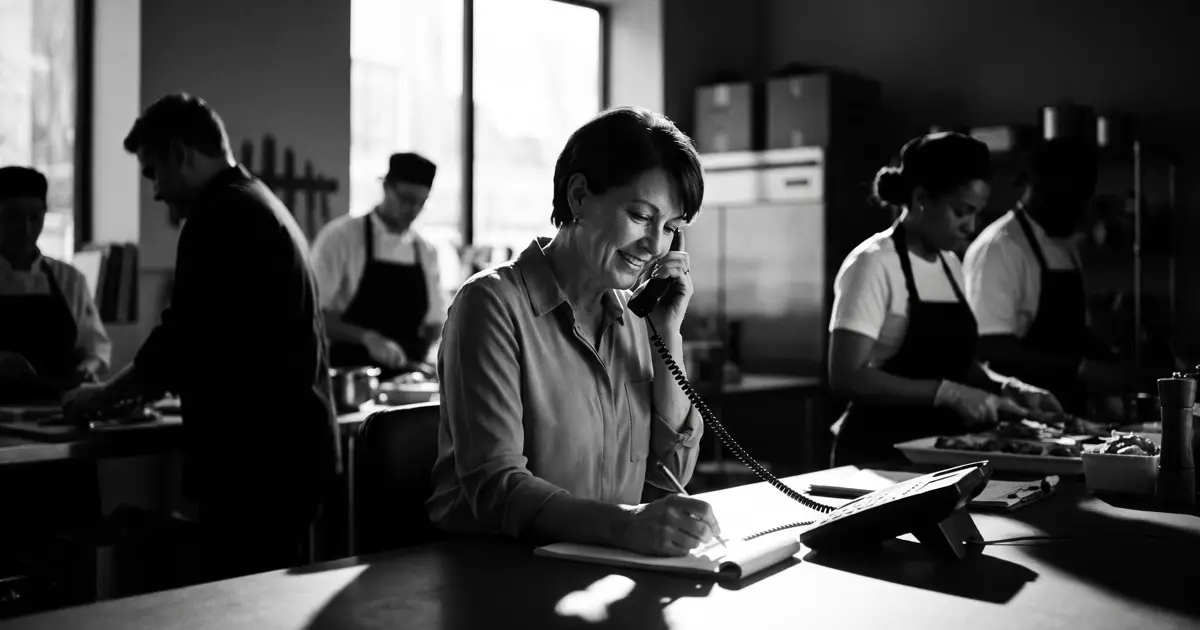
This guide covers how caterers can answer enquiries quickly, collect the right information, protect the sales team from interruptions, and make sure urgent calls on the day go to the right person. For related ideas, see Phone Handling for Restaurants and Phone Handling for Wedding Venues.
The calls a caterer receives
| Call type | Who calls | What is needed |
|---|---|---|
| New enquiry | Prospective client | Capture details, promise a callback with a quote |
| Quote follow-up | Prospective client | Link to the earlier enquiry |
| Menu or dietary question | Client or guest organiser | Accurate answer or consultant callback |
| Changes to numbers or timing | Existing client | Update the order and confirm |
| Delivery and setup logistics | Venue or driver | Immediate operations contact |
| Complaint or issue after the event | Client | Manager, with a written record |
The first two rows are the revenue calls. The fourth and fifth are where reputations are won or lost.
Collecting a good enquiry
A caterer cannot price an event without a set of facts. A caller who is vague about numbers and timing is not being difficult; they just have not been asked the right questions. The enquiry call is the chance to ask them.
The enquiry in six questions
- Date and timeWhen is the event and what time does service start?
- GuestsApproximate number, and how firm it is.
- VenueWhere, and whether there is a kitchen, power, access and parking.
- Service styleBuffet, plated, canapes, drop-off or full service with staff.
- Dietary needsVegetarian, vegan, religious requirements and allergies; flag clearly.
- Contact and timingName, best contact method, and when they need a quote.
Whoever answers should use the same list. Standard fields make a quote quicker, and mean a missing detail is spotted early. A voice agent can follow this list and produce a summary for the sales team, as described in AI Receptionist Appointment Requests. It should say plainly that a person will prepare a quote, and should not name a price or confirm availability.
Dietary needs and allergies
Food allergies are a safety matter. A mistake can harm a guest. Handle any mention of allergies, intolerances or religious requirements with care at every step.
- Record exactly what the client says, in their words.
- Never tell a client that a dish is safe for an allergy unless a qualified person in your business has confirmed it.
- Flag the enquiry so that the person preparing the quote sees it first.
- Confirm the details in writing before the event.
- Make sure the kitchen sees the final list.
An automated agent should not give assurances about allergens. It can take the information and pass it to a person. See Voice AI Hallucinations for why agents must stick to approved facts on topics like this.
The calls on the day of the event
On the day, the most important call is the one from the venue, the client or a driver. The caterer's phone must reach the operations lead, wherever they are, quickly. Sales staff and kitchen staff should not be the ones to field these calls.
Sales line and event-day line
| Sales line | Event-day line | |
|---|---|---|
| Who calls | Prospective clients | Clients, venues, drivers, staff |
| Speed needed | Same day | Immediate |
| Who answers | Sales or enquiries team | Operations lead on duty |
| Out of hours | Message and callback | A direct route to the duty phone |
Give clients and venues the duty number in their confirmation. Use a menu option or a separate number for it, and make sure the person on duty has a way to see event details. Emergency Messages in Your IVR shows how to give urgent callers a clear route.
Busy seasons and quiet hours
Catering has seasons: weddings in summer, parties in December, corporate events through the year. Calls cluster just after exhibitions and just before major dates. During busy periods, the sales team is on site or in the kitchen, and enquiries go unanswered. Callback options and a short recorded message that says when you will reply protect the leads. See Handling Seasonal Peaks and AI Receptionist Overflow.
Changes, numbers and confirmations
Guest numbers change right up to the event. A phone change should always be followed by a written confirmation, so there is a record. A voice agent can take the request, but staff should update the order and confirm. Never accept the change as final until it is written down.
Measuring the phone side of catering
Monthly review for a caterer
- Enquiries received and how many received a quote within the promised time
- Calls missed at busy times
- Dietary and allergy information recorded and passed on
- Event-day calls and how quickly they reached the duty lead
- Questions that came up often and are not in the approved answers
Compare enquiries with bookings over time, and record where each enquiry came from. See The Cost of Missed Calls for a way to think about unanswered enquiries.
A worked example: a wedding weekend
Picture a small caterer on a Saturday with two weddings and a corporate lunch. The owner is on site, the sales manager is at a tasting, and the kitchen is full. The phone brings an enquiry for a December party, a venue asking where to deliver, and a client who has just remembered a guest's allergy.
With a sorted setup, the December enquiry is captured with the six standard questions, the venue call reaches the operations lead on duty, and the allergy is recorded exactly and flagged to the kitchen before the end of the call. Nothing depends on one person's memory. The example is hypothetical, but it shows why catering needs the phone to carry the details accurately, and to send the right call to the right person at the right time.
- Keep the duty phone charged and its holder named on the event sheet.
- Confirm any late allergy information in writing the same day.
- Review the weekend's enquiries on Monday morning.
Doing it in Call
In Call, an IVR can offer separate options for new enquiries, existing events and the event-day duty line, each going to its own queue, with business hours deciding what happens out of hours. Callback requests protect enquiries during busy periods, and voicemail per queue catches messages. An AI agent can follow your enquiry questions and give the sales team a summary, and handoff rules pass allergy and urgent matters to a person. Contacts keep each client's history, and appointments can be used for tastings and site visits. See Setting Up Call Queues and Appointment Booking in Call.
Frequently asked questions
Can an AI agent quote for a catering event?
No. It can collect the enquiry details and pass them to a person who prepares a quote and confirms availability.
How should allergies be handled on the phone?
Record exactly what is said, flag it clearly, give no assurances unless a qualified person has confirmed, and confirm the details in writing.
Who should answer calls on the day of an event?
The operations lead on duty, through a separate number or menu option, so these calls do not wait with sales enquiries.
What details do we need for a quote?
Date, time, guest numbers, venue, service style, dietary needs and contact details. Use the same list on every call.
How quickly should we return enquiry calls?
As quickly as you can; many clients favour the first caterer to reply. Tell callers when to expect a quote and keep to it.
Can the phone confirm changes to guest numbers?
It can record the request, but staff should update the order and send written confirmation.