Phone Handling for Opticians: Eye Tests, Repairs and Collections
How an optician's practice can handle eye-test bookings, glasses-ready and repair calls and urgent eye concerns, with clear routing and sensible automation.
The optician is a curious mix of clinic and shop. In the back room, an optometrist is carrying out an eye test that needs quiet and concentration. At the front, assistants are helping people choose frames, taking measurements and handling repairs. Both sides get phone calls, usually at the worst moment: the test room is in the middle of a test, and the counter is busy with a customer.
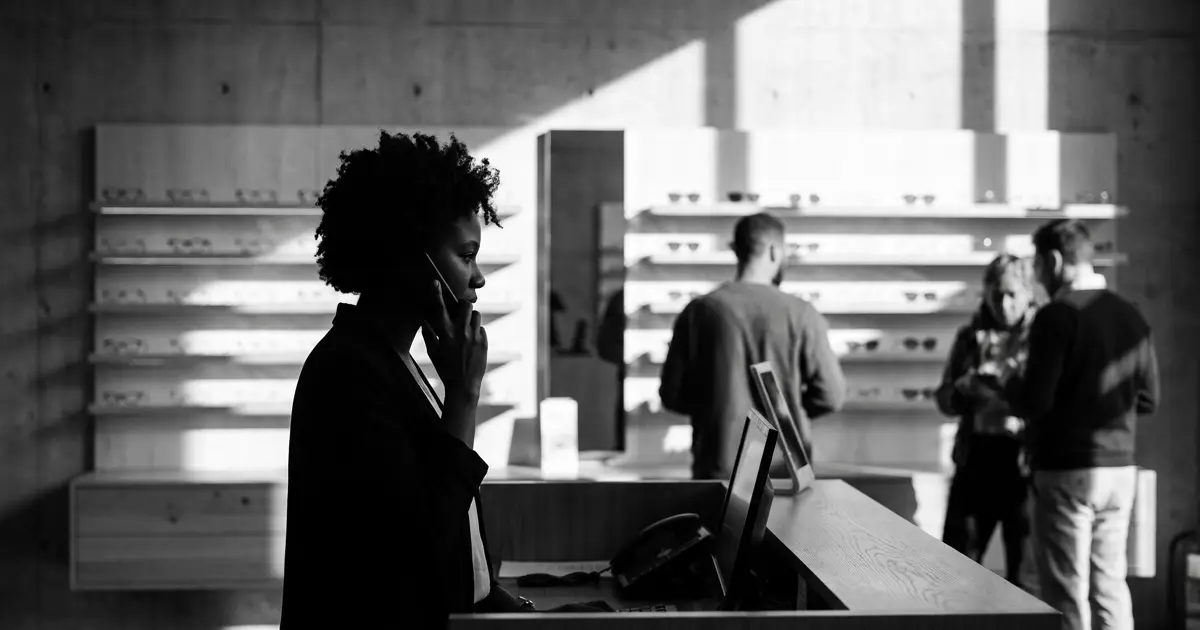
The result is a phone that rings out, or an interrupted conversation with someone at the counter. This guide sets out the common calls, the questions to ask, how to deal with the glasses-ready enquiry that fills so many hours, and how to handle the rare but important urgent eye call. For similar appointment-based practices, see Phone Handling for Dental Practices.
The calls an optician receives
| Call | Frequency | Who should handle it | Notes |
|---|---|---|---|
| Book an eye test | Very common | Reception or an automated request | Ask about reason and recall |
| Are my glasses ready? | Very common | Counter or automated message | Link to status where possible |
| Repairs and adjustments | Common | Counter | Offer a time to drop in |
| Contact lens enquiries | Common | Contact lens specialist | Ask about the last check |
| Prices and offers | Common | Counter | Explain in qualitative terms; confirm on the premises |
| Insurance and funded tests | Moderate | Reception | Check the eligibility rules of the scheme |
| Urgent eye concern | Rare | Clinician or urgent care route | Follow the clinical protocol |
Notice how many of these are routine. If the receptionist is on the phone to someone asking whether their glasses are ready, the person at the counter who wants to buy frames waits. Separating the routine from the personal saves everyone time.
Booking an eye test
An eye test booking is simple to take and surprisingly easy to get wrong. Appointment length depends on the reason: a routine check, a first-time test, a contact lens fitting, a test for a child or a follow-up for a known condition each take different amounts of time. Booking the wrong length leaves the clinician short or the diary full of gaps.
The eye-test booking checklist
- Name, contact number and email
- Date of birth if your system needs it
- Reason for the visit: routine, new symptoms, contact lenses, child or other
- When they last had a test, and where
- Whether they wear glasses or lenses now, and whether they bring them
- Any scheme or funding that may cover the test
- Preferred days and times, and anyone who needs help to attend
- For children, the age and any worries about school or reading
Remind callers to bring their current glasses and any prescription, and a list of medicines if relevant. Tell them roughly how long to allow, and whether pupil dilation might affect driving afterwards, if your practice does it. That information prevents awkward surprises.
Urgent eye concerns
Most callers want a routine appointment. A few describe something that might be serious: a sudden change in vision, flashes or floaters appearing, pain, a chemical splash or an injury. These cannot be handled like routine bookings. The practice needs a written protocol, agreed with the clinicians, that sets out what reception says and where the caller is sent.
A protocol for worrying symptoms
- Listen for the signsSudden changes, pain, injury, or something the caller describes as alarming.
- Do not interpretReception does not advise on cause or treatment.
- Pass to a clinicianOr give the approved instruction to seek urgent care.
- Record the callNote what was said and what happened.
- Follow upThe clinician or manager checks that the caller got help.
Are my glasses ready?
This single question can take up an hour of reception time on a busy day. It is also the easiest to improve. Think about how a customer would like to find out: a message when the glasses arrive is best, with an opening time. The phone then becomes a backup rather than the main route.
Ways to handle collections
| Customer rings to ask | Practice tells the customer | |
|---|---|---|
| Staff time | High, repeated enquiries | Low, one message per order |
| Customer experience | Uncertain, may need several calls | Clear, comes with a collection time |
| Counter interruptions | Frequent | Fewer |
| Setup | None | Needs a routine at the point of order |
When customers do ring, a quick answer is needed: the order status, whether they can collect today and what to bring. A recorded message or an automated reply can provide opening hours and general collection information, then offer to take a name and number for a call back. Message Templates in Call and Auto-Replies Done Well have ideas for wording.
Repairs, adjustments and lenses
Repairs and adjustments are usually walk-in jobs. The phone call is to find out whether the practice can do it and when to come. Ask what has happened, what type of frame it is and whether the lenses are damaged. For contact lens customers, ask when they were last checked, since many practices require a recent review before supplying lenses.
- Offer a time to drop in, and say how long a simple adjustment usually takes.
- For complex repairs, ask the caller to bring the glasses so the team can say what is possible.
- For contact lenses, check the date of the last review before promising a supply.
- Be honest if a repair is not possible, and explain the alternatives.
Where an AI receptionist fits
An AI receptionist can answer when the counter is busy or the practice is closed, give opening hours and location, take a request for an eye test and take a message about glasses. It can pass urgent symptoms to a person at once. It should not interpret symptoms, state that an order is ready unless it can see the status, or quote a price it cannot support. Voice AI can mishear names and dates, so it should read them back. See Common Requests an AI Receptionist Handles.
Recall, reminders and the long game
Eye care runs on recall: patients are due back after a set interval, and a practice that reminds them keeps a steady diary. The phone plays a part both ways. When a reminder goes out, some people will ring to book; when they ring, the booking should be easy and the recall date should be updated. Children, older adults and people with long-term conditions often have specific intervals, so note them on the record.
- Record the next recall date at the end of each visit.
- Ring or message a little before the date, and offer two or three slots.
- If someone says they want to wait, note it and try again later.
- Keep reminders short and free of clinical detail.
Reviewing recall by month shows how many patients are overdue and how many your calls and messages bring back. See Reminder Calls That Cut No-Shows for the principles.
Doing it in Call
In Call, a menu can offer eye test booking, glasses and collections, and speak to the practice, with callback requests when the counter is busy. Contact records can note the recall date for each patient, and appointments can be recorded in Call. See Setting Up IVR and Business Hours in Call, Appointments in Call and Callback Requests in Call.
Frequently asked questions
What should we ask when booking an eye test?
The reason for the visit, when they last had a test, whether they wear glasses or contact lenses, any scheme that may cover the test, preferred times and any access needs.
How do we handle callers asking whether glasses are ready?
Tell customers when their order arrives so they do not need to ring, and give the rest a quick answer or an automated message with collection hours.
What if a caller describes a sudden change in vision?
Follow your clinical protocol. Reception does not interpret symptoms; the call goes to a clinician or the caller is directed to urgent care.
Can an AI receptionist book eye tests?
It can take a request for an eye test and pass it on. A person or your booking system should confirm the slot.
Why does the reason for the test matter?
Different reasons need different appointment lengths and sometimes different practitioners. Booking the right length avoids gaps and delays.
How do we deal with repairs by phone?
Ask what happened, offer a time to drop in, and ask the caller to bring the glasses so the team can say what is possible.